
What Is a Freight Forwarder Network and Why Does It Matter
Moving freight across borders is complex. Documentation, customs clearance, carrier coordination and compliance do not manage themselves. For independent freight forwarders, the hardest part is often not the logistics. It is finding a reliable partner on the other end. That is exactly what a freight forwarder network is built to solve.
What Is a Freight Forwarder Network?
A freight forwarder network is a professionally managed alliance of independent freight forwarding companies from multiple countries, connected through a shared platform, common standards, and mutual business agreements.
A well-run network does three things:
- Connects independent forwarders with trusted, vetted partners in markets they do not operate in directly
- Provides financial protection mechanisms that reduce the risk of working with unfamiliar agents
- Creates a structured environment for business development, collaboration and long-term growth
How a Freight Forwarder Network Works:
A forwarder applies for membership, goes through a vetting process and once accepted, gains access to the network's global membership base. When a shipment needs to move to a country where the forwarder has no direct agent, they can identify a trusted network partner in that market and work with them with confidence.
The vetting process is what makes this work. Strong networks typically require members to:
- Pass financial credit checks before admission
- Submit verified commercial references
- Demonstrate an established presence in their local market
- Agree to the network's code of conduct and operating standards
- Maintain ongoing compliance with membership requirements
The result is a partner base where every member has been assessed, not just registered.
What Makes a Good Freight Forwarder Network:
The value of membership depends entirely on the quality of the network itself. Here is what separates a strong network from a weak one:
Rigorous Vetting Standards: Open networks with no membership criteria offer little protection. A quality freight forwarder network hand-selects members, checks their financials, verifies their references, and assesses their market standing before granting access.
Exclusivity by Market: The best networks limit membership to one or a small number of forwarders per city or region. This protects members from competing with each other inside the network and ensures every member is the best available option in their market.
Built-In Financial Protection: Working with a new agent always carries payment risk. Strong networks address this directly through financial protection systems that cover transactions between members, reducing exposure to default and non-payment.
Specialist Verticals: General freight networks serve a purpose, but the most valuable ones are structured around specialisms. Pharmaceutical cold chain, project cargo, time-critical logistics, LCL consolidation, and international relocations all require different expertise. A network with dedicated verticals connects forwarders with partners who actually understand their cargo type.
Face-to-Face Business Opportunities: Relationships drive revenue in freight. Networks that invest in annual conferences and regional events give members structured, scheduled opportunities to meet partners, build trust, and generate business in person.

Types of Freight Forwarder Networks:
It helps to understand that not all networks are structured the same way. The main types include:
- General freight networks: Cover air, sea, and road freight across a broad membership base with no specific sector focus
- Specialist vertical networks: Dedicated to specific cargo types such as pharmaceuticals, project cargo, or time-critical shipments
- Regional networks: Focused on a specific geographic area such as Southeast Asia, Europe, or Latin America
- Multi-vertical networks: Structured around several specialised groups under a single umbrella, allowing members to participate in multiple verticals simultaneously
Multi-vertical networks offer the broadest commercial opportunity because members can tap into cross-sector business from a single membership relationship.
What X2 Logistics Networks Offers:
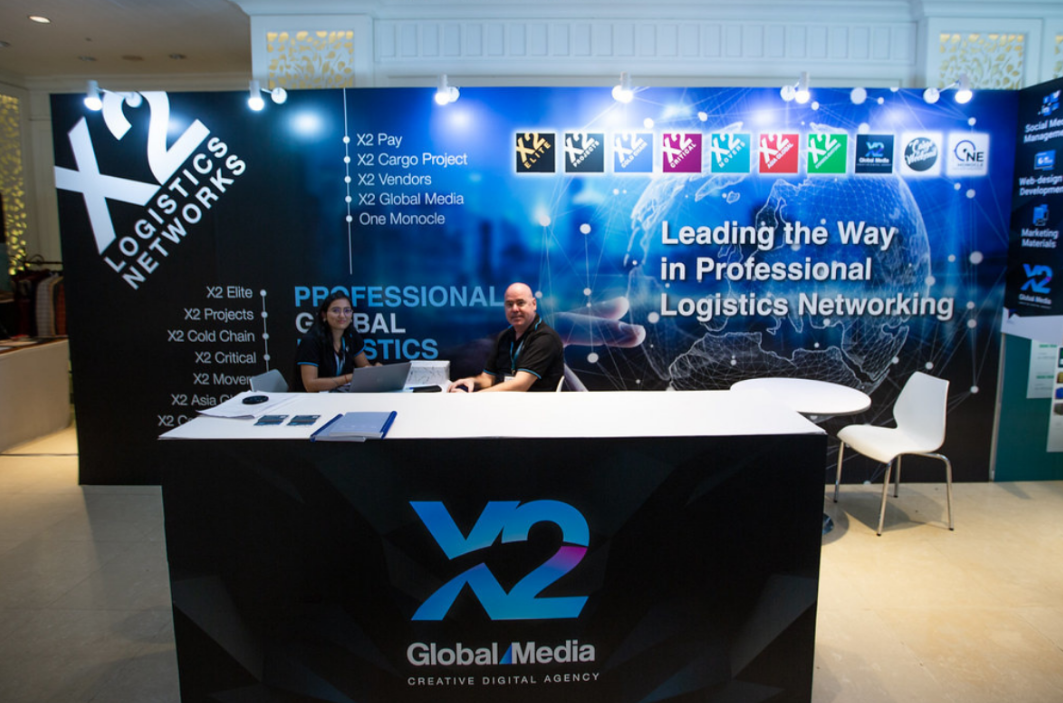
X2 Logistics Networks was founded in 2012 with a clear purpose: to give independent freight forwarders the collective power of a multinational without losing the agility of local ownership. It operates as a multi-vertical freight forwarder network across seven specialised groups:
- X2 Elite: Full-service air, sea, and customs brokerage specialists
- X2 Projects: Out-of-gauge, heavy lift, breakbulk, and energy sector cargo
- X2 Critical: AOG support, hand carry couriers, and next-flight-out solutions
- X2 Cold Chain: GDP-compliant pharmaceutical and perishable logistics
- X2 Global: Collaborative community-driven freight partnerships
- X2 Movers: International relocation and household goods specialists
- X2 Consolidators: LCL groupage and NVOCC professionals
Every member is hand-selected. Every application includes financial credit checks and commercial reference verification. Members can join multiple groups, opening cross-vertical business opportunities within a single trusted ecosystem.
X2 also provides members with the Cross Financial Protection System, covering transactions between members, and X2 Pay, a proprietary digital wallet that eliminates bank fees and speeds up international payments. The annual X2 Conference brings together over 700 delegates from more than 90 countries, with 20 pre-scheduled one-on-one meeting slots per attendee, making it one of the most commercially productive events in the independent freight forwarding calendar.

Conclusion:
A freight forwarder network is one of the most practical tools an independent forwarder has for growing beyond the limits of their immediate market. It provides vetted partners, financial protection, collective buying power, and structured business development opportunities that would be impossible to replicate independently. The key is choosing a network that holds its members to a genuine standard, one where every partner has earned their place.
Frequently Asked Questions
Q: What is the difference between a freight forwarder network and a freight forwarder association?
An association is typically a trade body focused on advocacy, education, and industry standards. A network is an operational business alliance focused on connecting members with trading partners, protecting transactions, and generating commercial opportunities.
Q: How do freight forwarder networks make money?
Most networks charge annual membership fees. Some also charge joining fees, event registration costs, or fees for additional services such as payment platforms or enhanced financial protection tools.
Q: Is a freight forwarder network worth it for small forwarders?
Smaller forwarders often benefit the most. They gain access to a global partner base, better freight rates, financial protection, and business development opportunities that would otherwise require significantly more resources to access independently.
Q: How do I know if a network's members are trustworthy?
Look for networks that conduct financial credit checks, require commercial references, and enforce exclusivity by market. Open networks with no vetting criteria offer far less assurance than curated, application-based alliances.
Q: Can a forwarder belong to more than one network?
Yes, and many do. However, the most valuable memberships tend to be in networks with strict exclusivity policies, as these protect the commercial interests of members and maintain the quality of the partner base.
Q: How does financial protection work inside a network?
Protection systems vary by network. The strongest ones, such as X2's Cross Financial Protection System, cover transactions between members directly, reducing the risk of non-payment and giving members greater confidence when working with new partners for the first time.
Join a Freight Forwarder Network Built on Real Standards
Independent freight forwarders who are serious about growth need more than a contact list. They need a network where every partner has been vetted, every transaction carries protection, and every membership opens doors to genuine commercial opportunity.
X2 Logistics Networks offers exactly that across seven specialised verticals, with members in over 90 countries and a conference that delivers real business.
Visit x2logisticsnetworks.com to apply for membership or book a discovery call with our team at X2 today.